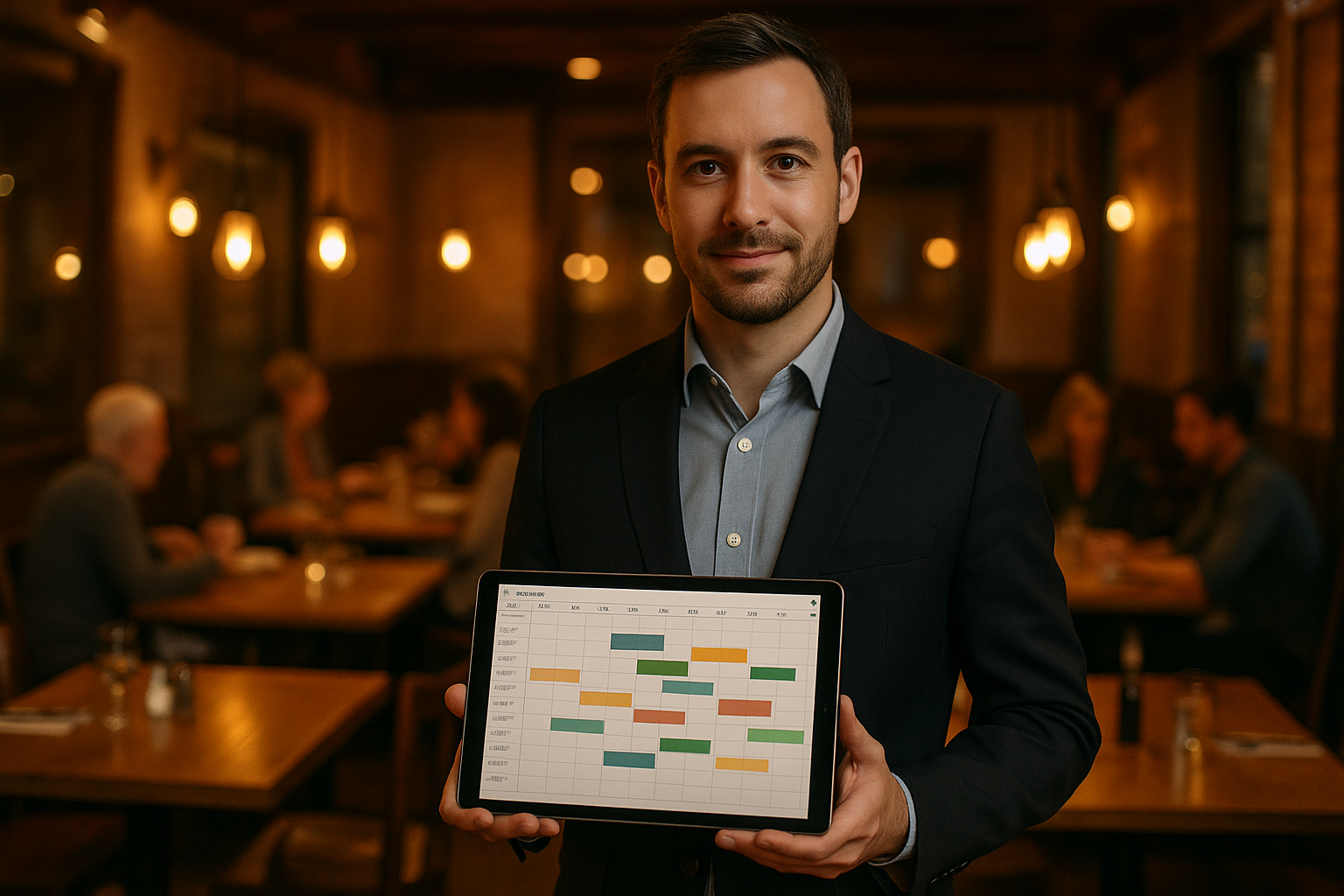
Front-of-house host using a tablet with a timeline grid while guests arrive, warm lighting

From Bookings to Retention: How Reservation Data Can Help Reduce Restaurant Staff Turnover

Staff retention is at the top of every operator’s list in 2026. As the industry moves away from crisis hiring and toward stabilising teams, operators need practical, day-to-day tools that reduce stress for front‑of‑house staff and make schedules predictable. Reservation data—when organised and actioned correctly—becomes one of the easiest, highest‑impact levers for improving working conditions and lowering turnover. Why reservation data matters for retention Retention problems often look like HR issues, but they usually start in service delivery: unpredictable covers, last‑minute no‑shows, and chaotic seating plans all translate into rushed shifts and stressed staff. Reservation systems that go beyond taking names simply record data. When that data is analysed and used to shape rotas and workflows, it reduces friction. ...


September 6, 2026 · 4 min · 682 words · Tabledoo
Host using a tablet to manage a busy restaurant floor with warm lighting and guests dining in the background

Staff Shortages and Reservations: Practical Steps to Protect Guest Flow

Front‑of‑house teams are stretched thin across Europe as labour markets tighten. Operators who protect guest flow and table turnover with sensible automation — not by cutting service corners — will keep covers moving, control revenue per seat, and preserve the guest experience even when hiring is hard. Why staffing gaps increase front‑of‑house pressure When restaurants have fewer hands on deck the workload concentrates on booking management, guest communications, and on‑the‑fly seating decisions. Recent labour reports show continued month‑to‑month weakness in leisure and hospitality employment in the U.S., highlighting how quickly operational pressure can rise when staffing falls. (kiplinger.com) ...

August 9, 2026 · 3 min · 593 words · Tabledoo
A busy independent restaurant on match night with a host using a tablet while guests scan a QR code at a table

How independents can capture World Cup footfall: managing reservations, waitlists and guest flow

Major sporting events like the FIFA World Cup create short windows of intense demand: unpredictable walk-ins, late kick-offs, and groups who prioritise atmosphere over reservations. For independent restaurants that rely on margins and guest experience rather than scale, the opportunity is clear — and so is the risk. To convert event-driven footfall into sustainable covers without sacrificing service quality, operators need systems that lock in bookings, reduce no-shows, speed service and keep the floor moving. Here’s a practical playbook for how to manage reservations during events using a simple, integrated toolkit. ...

July 26, 2026 · 4 min · 752 words · Tabledoo
A warmly lit dining room with a host using a tablet showing a timeline grid; guests seated at tables in the background.

When subscription perks affect table turnover: what independents should do now

Introduction Loyalty schemes and subscription perks are powerful tools for driving repeat visits — but they can also change guest behaviour in ways that matter to independents. When a popular chain recently trimmed an unlimited beverage subscription, it highlighted a truth many operators already know: perks that reward time in-house can lengthen dwell time, reduce covers per service, and complicate the job of managing table turnover. For independent restaurants with tight seat capacity and narrow margins, the right operational controls matter more than ever. ...

July 13, 2026 · 4 min · 683 words · Tabledoo