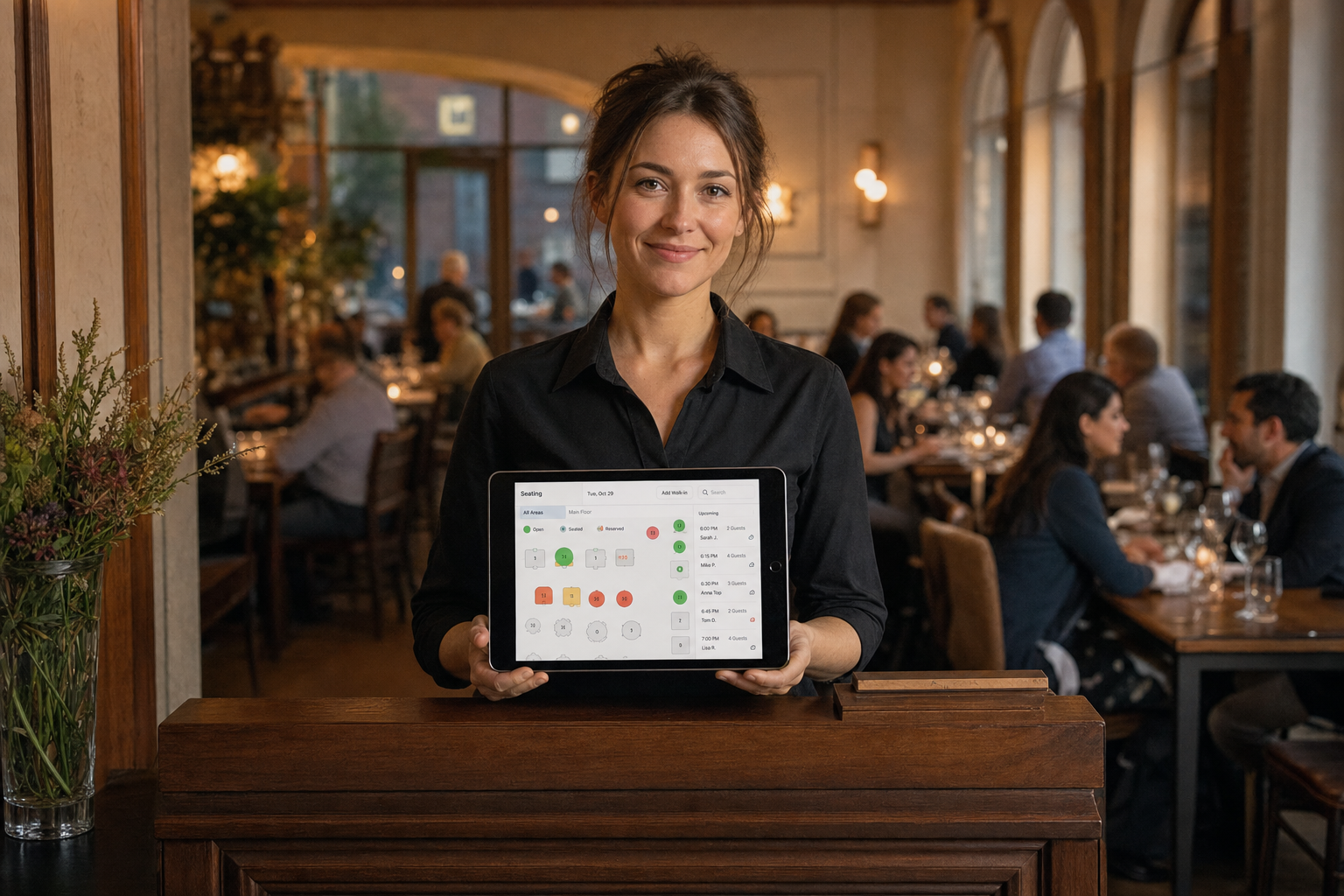
Restaurants that consistently outperform their peers treat technology like background infrastructure — reliable, helpful and largely invisible to both guests and staff. The most effective reservation management software doesn’t call attention to itself; it quietly removes friction from the guest journey, automates the predictable work that causes mistakes, and hands front‑of‑house teams a clear timeline so they can do what guests actually remember: great service.
Why invisible tech matters
Visible, clunky systems create work and anxiety. Invisible tech focuses on outcomes: fewer interruptions, predictable seating cadence, and frictionless guest touchpoints. Industry reporting shows that operators are shifting investment toward systems that simplify workflows and stay out of the way of service — letting human teams lead on hospitality while software handles routing, reminders and conflict detection. (nrn.com)
The knock‑on benefits are practical. When booking and table assignment work reliably behind the scenes, hosts spend less time firefighting and more time anticipating a table’s next move. That reduces service delays and preserves the ambience that drives return visits.
Small changes that remove guest friction
A handful of focused improvements to the booking journey materially lift conversion and reduce abandoned bookings: a fast, branded public booking page; an AI booking assistant for quick questions outside opening hours; and transparent availability that sets guest expectations before they arrive. Guests increasingly expect to book directly on a venue’s website rather than navigate third‑party marketplaces — making a smooth direct booking experience a competitive advantage. (resdiary.com)
Practical examples operators can implement today:
- Use a commission‑free, branded public booking page so guests book directly and you keep the data.
- Add an AI booking assistant (chatbot) to answer availability, dietary and access questions after hours without staff input.
- Offer immediate, clear confirmation and simple change/cancellation flows so guests can modify plans without calling.
These steps reduce friction for guests and lower the volume of basic queries that otherwise tie up the host stand.
How invisible tools help staff focus on service
On the floor, invisibility means a single, accurate source of truth: a minute‑precise timeline or seat board where table states update in real time, unassigned parties are visible, and waitlist guests can be quick‑seated. When the system detects conflicts, suggests smart table merges and surfaces VIP notes, hosts and managers stop doing mental load work and start delivering a consistent flow to each shift.
Features to look for in reservation management software include live timeline/grid views, real‑time table statuses (available, reserved, occupied, delayed), quick‑seat waitlist workflows and guest profiles with tags and allergy notes. Those capabilities let teams act proactively instead of reactively — and they scale with busy service nights without adding complexity.
Measuring impact: covers, no‑shows and speed of service
The financial case for invisible reservation tech is straightforward. Automated reminders and a low‑friction booking funnel both reduce no‑shows and cancellations; some European industry analysis shows reminders and simple process changes can lower no‑shows by a substantial margin. For example, targeted SMS reminders have been associated with reductions in no‑shows in the order of a third, depending on timing and messaging. (elavon.ie)
On the revenue side, venues that prioritise direct bookings and a smooth booking funnel capture more repeat business and avoid commission fees associated with intermediaries — that headroom pays for good software and staff training. Operationally, a reliable timeline reduces turnover gaps between covers and increases average daily utilisation because table assignments are made with minute‑level precision rather than guesswork.
In short: small, measurable investments in seamless booking, reminders and a real‑time seat board consistently pay back through higher covers, fewer lost bookings and a calmer front‑of‑house.
Next steps
If you run a restaurant in Europe and want to make technology invisible rather than intrusive, start by auditing your booking journey: can guests reserve and modify a table without calling? Do reminder messages go out automatically? Is your team looking at a single, live timeline during service?
Tabledoo was built around these practical ideas — commission‑free public booking pages, an AI booking assistant to answer guest questions 24/7, minute‑precise timeline and live table boards, automated confirmations and reminders, and guest profiles that travel with every booking. If you want to see how invisible tech can free your team to focus on hospitality, try Tabledoo or explore our help centre and features at https://tabledoo.com.