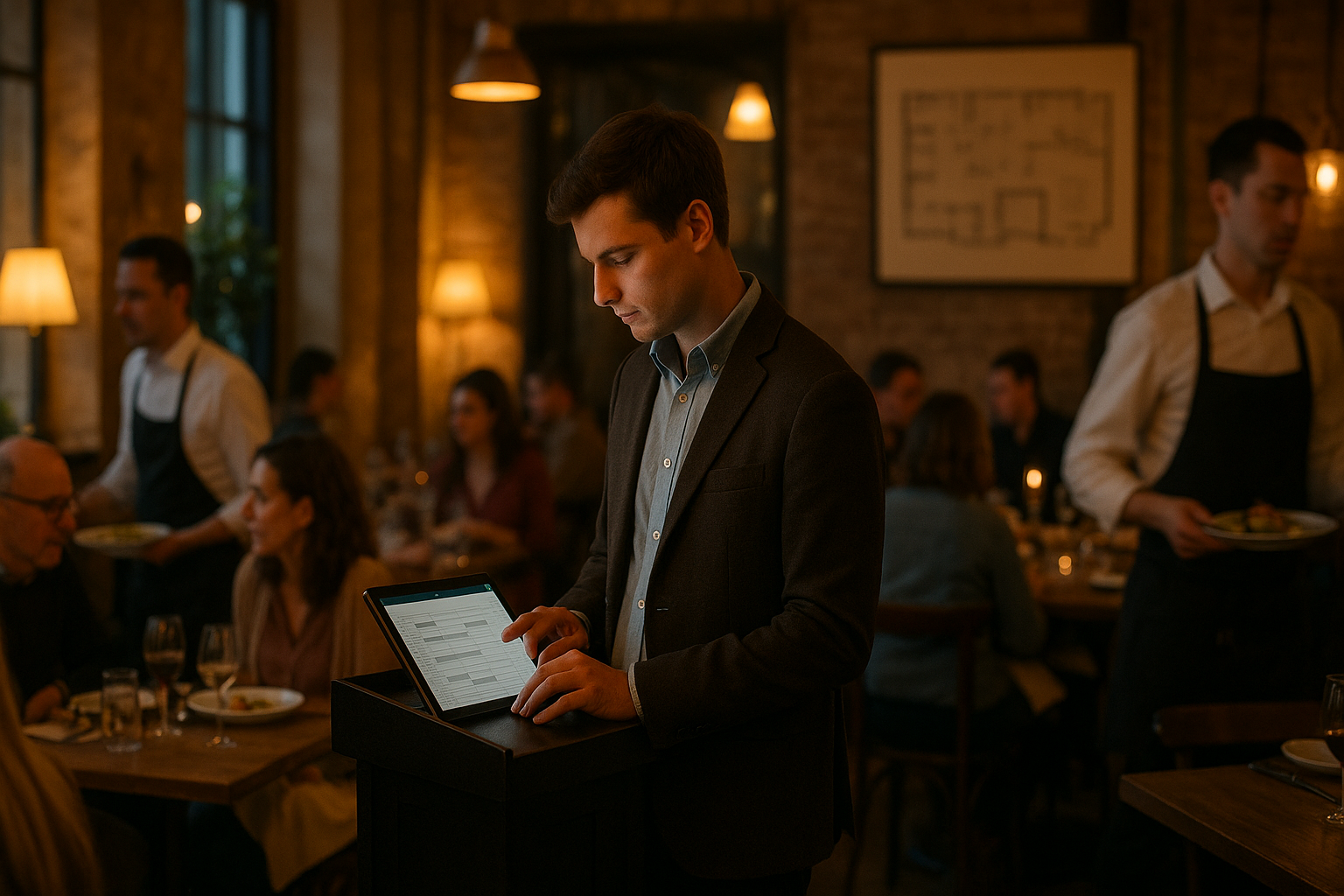
As restaurants grow, owners commonly find their daily priorities shifting: where once they managed covers and coached staff at a neighbouring table, they now need to set strategy, hire and train teams, and protect the guest experience across more services and shifts. That shift—from hands‑on operator to business owner—creates pressure points around delegation, consistency and time management. The right reservation and front‑of‑house (FOH) tools let owners stop firefighting and start building repeatable systems that deliver the same guest experience regardless of who’s on duty.
Why structured reservation systems matter
Growth brings variability: more covers, more channels, and more people involved in the guest journey. Guests increasingly expect to book online and receive reliable confirmations; in some European markets half or more of visits are planned via digital bookings, and that percentage rises among frequent diners. (newsroom.metroag.de)
At the same time, the hospitality manager’s role is becoming more managerial and strategic—leading people, standardising processes and deploying automation to keep quality consistent as operations scale. This transition isn’t just cultural; it requires tools that let owners capture knowledge, enforce standards, and monitor outcomes without being present on every shift. (cedefop.europa.eu)
Delegate with confidence: role‑based permissions and clear workflows
Delegation only works when responsibility and authority are explicit. Role‑based permissions let owners and managers map tasks to roles (Owner, Manager, Host, Waitstaff) and limit what each team member can change—reducing mistakes and ensuring accountability. When a host has a clearly defined permission set, they can manage bookings and waitlists without accidentally editing pricing, closing sections, or overwriting special instructions.
Couple permissions with an interactive timeline grid and minute‑level booking view and you get operational clarity: every table’s status, incoming changes, and overlaps are visible at a glance. Pairing this with automated booking confirmations and reminders reduces the administrative burden on FOH staff and cuts no‑shows—industry operator data shows automated confirmation and reminder flows can reduce no-shows substantially within weeks of implementation. (perceedigital.com)
For owners moving off the floor, a branded public booking page gives two big advantages: it captures direct bookings (keeping margins higher) and funnels guest information into one system so staff can act on preferences or dietary notes without extra emails or sticky notes. These features let teams handle bookings end‑to‑end while owners focus on hiring, menus and growth.
Keep experience consistent: floorplans, timelines and analytics
Maintaining a consistent guest experience across more covers means standardising how tables are sectioned, how long turns should run, and how staff respond to delays. A visual floorplan editor with drag‑and‑drop sections makes it simple to translate an operational policy into daily practice—reconfigure for service, lock sections for private events, or balance workload across teams in minutes.
The timeline and live table status board reduce guesswork during peak service. Hosts and managers can see which covers are delayed, which tables are being turned, and where bottlenecks are forming. That visibility reduces rushed service, protects average check value and keeps guests happier.
Hard data closes the loop. Actionable analytics—occupancy by service, revenue per table, reservation trends and guest segmentation—turn intuition into repeatable decisions. Instead of relying on memory or instability from one busy night, owners can set guardrails (e.g., target turn times by daypart, optimal party mix, or when to open a second seating) and measure whether the changes improved throughput and guest satisfaction.
Next steps
If you’re transitioning from running covers to running a business, start by formalising the reservation and FOH processes you rely on today. Implement role‑based permissions so your team can act confidently, adopt visual timeline and floorplan tools to remove guesswork at peak times, and publish a branded booking page so direct reservations and guest data feed into one source of truth. Combine those with automated confirmations and reports, and you’ll free hours each week to focus on hiring, menu strategy and growth.
Learn how Tabledoo’s role permissions, interactive timeline and floorplan, public booking page and analytics help growing restaurants scale sustainably — visit https://tabledoo.com to start a trial and see these features in action.