Front‑of‑house teams are stretched thin across Europe as labour markets tighten. Operators who protect guest flow and table turnover with sensible automation — not by cutting service corners — will keep covers moving, control revenue per seat, and preserve the guest experience even when hiring is hard.
Why staffing gaps increase front‑of‑house pressure
When restaurants have fewer hands on deck the workload concentrates on booking management, guest communications, and on‑the‑fly seating decisions. Recent labour reports show continued month‑to‑month weakness in leisure and hospitality employment in the U.S., highlighting how quickly operational pressure can rise when staffing falls. (kiplinger.com)
Across Europe, hospitality remains on the list of hard‑to‑fill sectors and many operators report recruitment difficulties. This combination of fewer applicants and persistent vacancy rates means restaurants should plan for a sustained period of tighter staffing — and focus on tools that remove repetitive, low‑value tasks from your team. (ela.europa.eu)
Small, practical changes that reduce front‑of‑house load
You don’t need to overhaul operations overnight. Targeted automation addresses the highest‑cost friction points while keeping staff focused on service.
- Make bookings self‑serving. A public, commission‑free booking page lets guests reserve tables outside service hours and feeds reservations directly into your timeline — fewer calls for hosts and fewer transcription errors.
- Automate confirmations and reminders. Scheduled SMS or email confirmations and day‑of reminders remove repetitive outreach and significantly reduce no‑shows when used consistently. Even modest reductions in no‑shows restore covers and margin. (ncbi.nlm.nih.gov)
- Use a live waitlist and quick‑seat workflow. When a table frees up, a digital waitlist with estimated wait times and automated SMS updates avoids crowded doorways and constant phone checks.
- Apply simple booking rules. Auto‑allocation rules for table sizes, minimum and maximum cover times, and buffer minutes reduce conflict resolution calls and speed up seatings.
These are practical steps you can enable quickly in your system and train staff on in a single shift — the payoff is less frantic juggling and a calmer front‑of‑house.
How real‑time floor tools preserve service with fewer hands
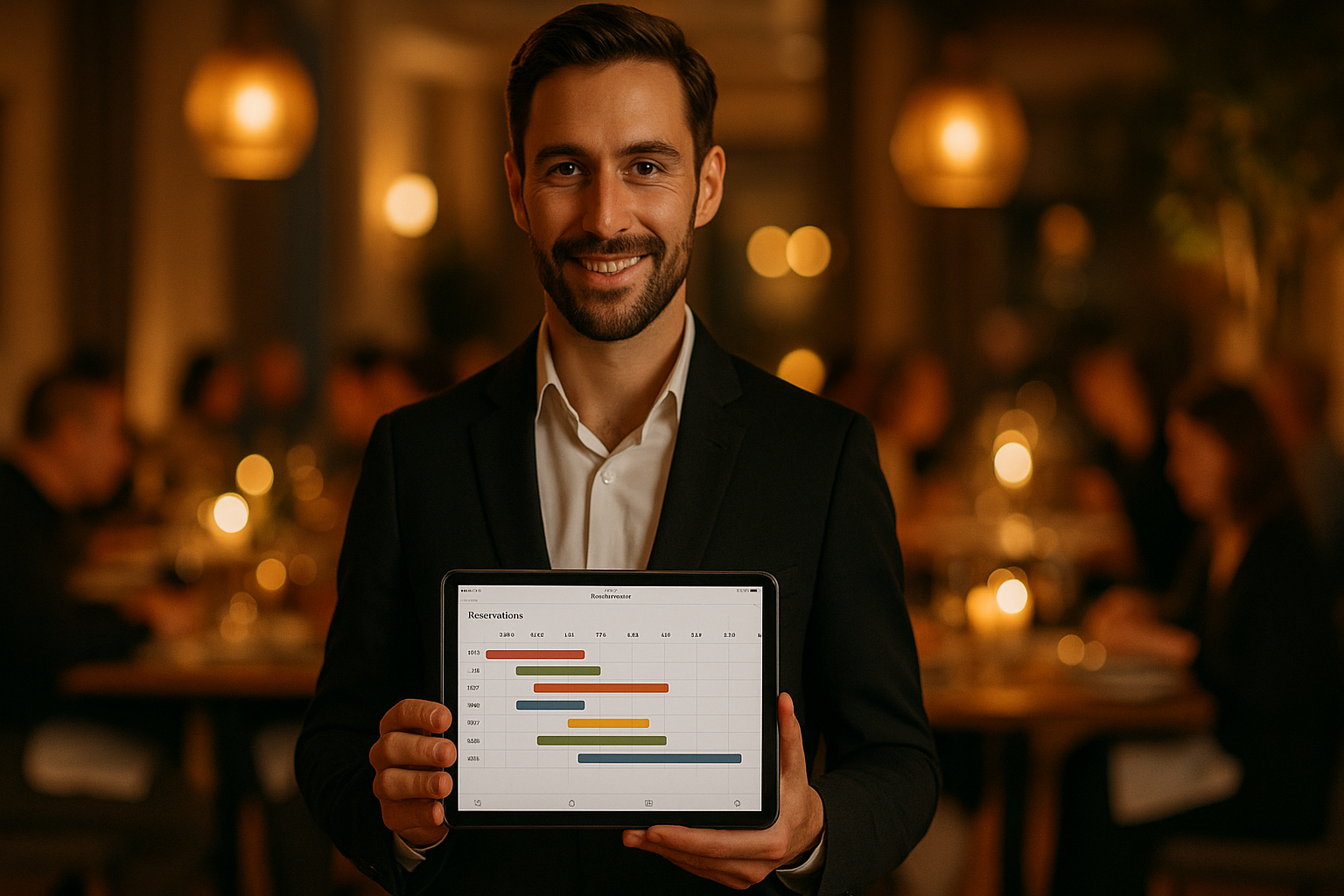
Automation should support good hospitality, not replace it. Real‑time timeline and floor views give hosts and managers a single source of truth so one person can oversee the room without guessing. A minute‑level timeline with live table states (available, reserved, occupied, delayed) keeps the team aligned on turn times and lets a host prioritise seating and bussing decisions from one screen.
Pairing the timeline with a waitlist and SMS updates means staff spend less time taking calls and more time preparing a polished welcome. Guest CRM data — tags, VIP flags, past visit notes — helps a smaller team personalise service without extra work. Case studies from operators who layered confirmations, smart reminders and a redesigned reservation flow show meaningful reductions in no‑shows and smoother seating during busy periods. (horecahub.ai)
Where appropriate, add an AI‑assisted booking assistant on your public booking page to answer routine questions 24/7 (opening hours, group booking rules, pre‑paid deposits). That small investment prevents many simple enquiries landing on the phone or at the host stand.
Next steps
Start with a short checklist: activate a public booking page, set up automated confirmations and a 24‑hour SMS reminder, enable a live waitlist, and train hosts on a shared timeline view. These steps reduce repetitive tasks, protect table turnover and let a smaller front‑of‑house team keep service quality high.
If you’d like a guided walkthrough of how those tools fit together in practice, see how Tabledoo’s real‑time timeline, waitlist workflows, SMS notifications and public booking page work as an integrated system to protect guest flow with fewer staff: https://tabledoo.com