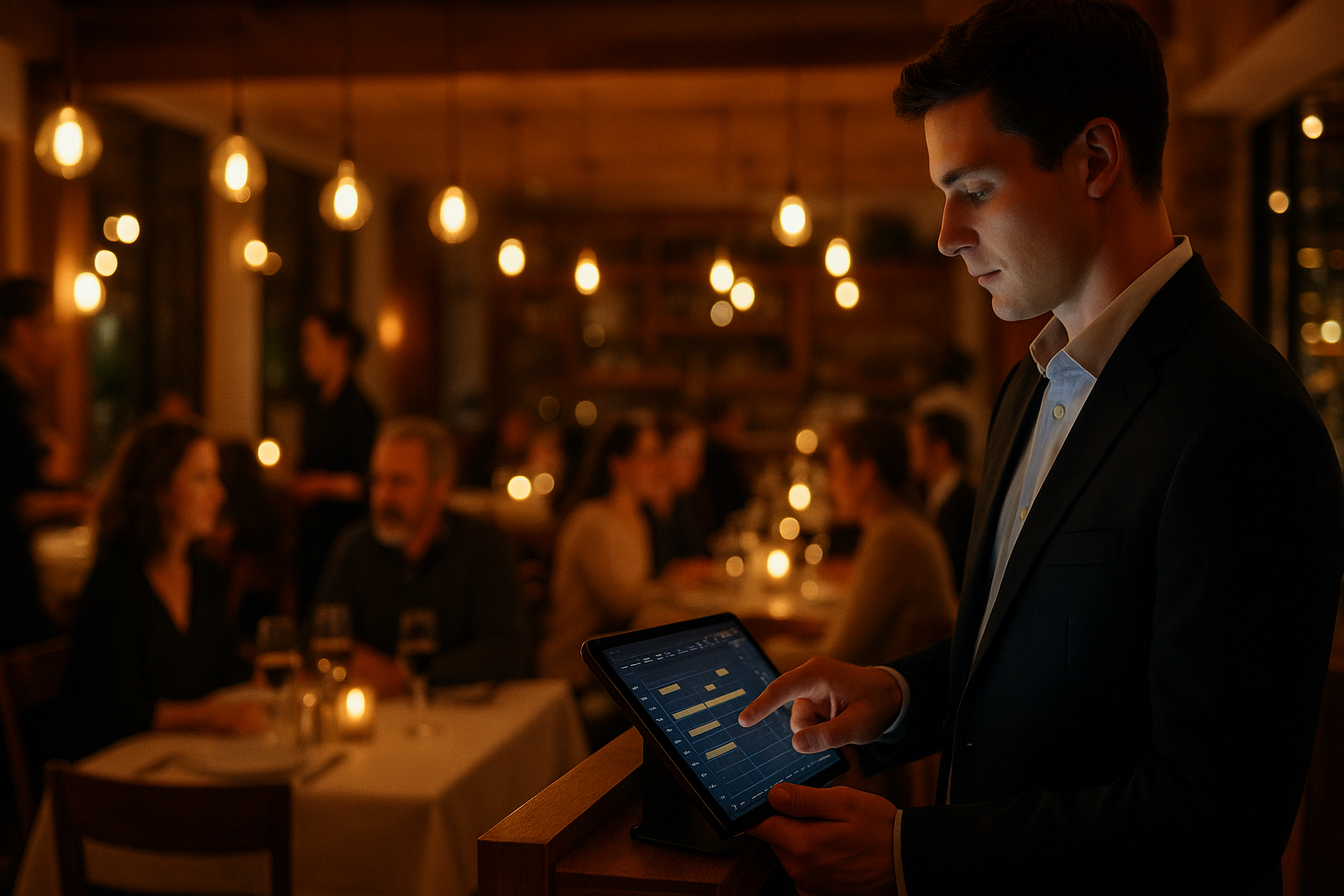
Across Europe, customer routines are shifting: more people are comfortable dining later, and the old assumption that evenings after 8 p.m. are a winding-down period no longer holds universally. That makes the late-night daypart an underused opportunity for operators who are willing to pilot later service, control turnover deliberately, and use data-driven tools to protect guest experience while capturing incremental revenue.
Why late-night covers matter now
Recent platform data shows measurable growth in dining activity around traditional late slots — the 8 p.m. and 9 p.m. windows have seen month-on-month increases in several markets, indicating demand that many operators previously treated as marginal. (opentable.com)
At the same time, local studies of evening footfall in European city centres show late-evening activity recovering strongly after the pandemic, particularly in areas investing in the night-time economy. This creates a practical window for restaurants to extend service without needing dramatic changes in location or brand. (bathbid.co.uk)
Delivery and on-demand channels continue to shape guest expectations for availability, even if growth in third-party delivery has moderated — diners now expect choices for later hours, whether dining in or ordering in. That expectation creates both competition and opportunity for restaurants prepared to meet diners after 8 p.m. on their terms. (rabobank.com)
Pilot later service with low-risk experiments
You don’t need to flip your hours overnight. Start with short, measurable experiments on specific nights: extend service by one hour on Thursday or Friday, offer a concise late menu, or run a time-limited promotion that highlights later availability. Use a branded, commission-free public booking page to promote these slots — it keeps distribution costs low and gives you a single place to capture demand.
Run each experiment for a predictable period (two to four weeks) and treat the bookings as an experiment you can iterate on. Use reservation analytics to compare cover volume, spend per head, and table duration for late-night bookings versus your core dinner service. That insight lets you judge whether late-night covers add net margin once staffing and menu costs are included.
Control turnover without harming experience
Extending the evening works only if you control flow. Minute-level timeline grids and a live table status board let hosts see exactly when tables will free up, so they can slot late arrivals without stacking the dining room. Tabledoo’s interactive timeline grid and live table status views give hosts the precision to manage seating windows and avoid cascading delays.
Pair this operational visibility with a smart waitlist and quick-seat workflow to convert walk-ins efficiently. A waitlist that tracks arrival time estimates and notifies guests via SMS keeps the front of house calm and reduces pressure on service teams. Where appropriate, offer a pared-back late menu designed for speed and margin — smaller plates, shareable bowls, or late-night cocktails — and use the booking system to flag these reservations so the kitchen and floor staff are prepared.
Protect guest experience with rules and CRM
Late-night covers often include a mix of regulars, visitors, and first-time guests. Use guest profiles and tags to protect VIP experiences and manage expectations. If a guest requires a quieter table or a longer dining window, flag that in the CRM so hosts can avoid seating conflicts.
Set occupancy and turnover rules in your floorplan — limit how many late-night seatings are bookable in sensitive sections and reserve a buffer of tables to absorb delays. Automated confirmation and reminder messages reduce no-shows, and minute-precision timeline controls make it simple to offer staggered seatings that respect both service quality and revenue goals.
Use data to iterate and scale what works
Make analytics your feedback loop. Track the metrics that matter: covers by hour, average length of late-night covers, average spend, no-show rates for after-8pm bookings, and staff overtime cost. A short pilot with clear KPIs will tell you whether to expand later service to additional nights or keep it as a targeted revenue lever.
Leverage the public booking page to A/B test messaging and offered times, then use the platform’s reports to see which promotions or menu formats drive repeat late-night business. Where pilots succeed, consider formalising a late-night product — a fixed-price late menu, a twilight happy hour that feeds into dinner, or themed nights that build regular after-8pm demand.
Next steps
If you’re ready to test later service, start with a focused pilot: pick one or two nights, design a concise late menu, and apply minute-level timeline control plus a managed waitlist to protect guest experience. Use reservation analytics to measure impact and iterate quickly. To try these features in a single front-of-house platform, visit https://tabledoo.com and explore how reservation analytics, the timeline grid, waitlist management and a commission-free booking page can help you capture after-8pm covers without compromising service.