Introduction
Rolling out a new menu is exciting: fresh dishes, new flavours and a reason to bring guests back. It’s also one of the riskiest operational moments for an independent restaurant. New dishes can slow tickets, crowd a single kitchen station and ripple into longer turnaround times for every table. Effective menu change management starts before day one of the launch and depends as much on front‑of‑house (FOH) processes and tools as it does on the kitchen. In this post we explain practical FOH steps—using reservations, booking durations, timeline views, QR menus, waitlists and guest CRM—to keep service smooth during a menu rollout.
Prepare with data: forecast impact and capacity
Before you publish the new menu, use historical booking and occupancy analytics to forecast which nights or service periods will be busiest. Look for patterns: which evening bands sell the most starters, when mains with long cook times tend to peak, and how long average covers are on similar service nights. These insights let you model the impact of slower-to-plate items and decide whether to stagger the rollout.
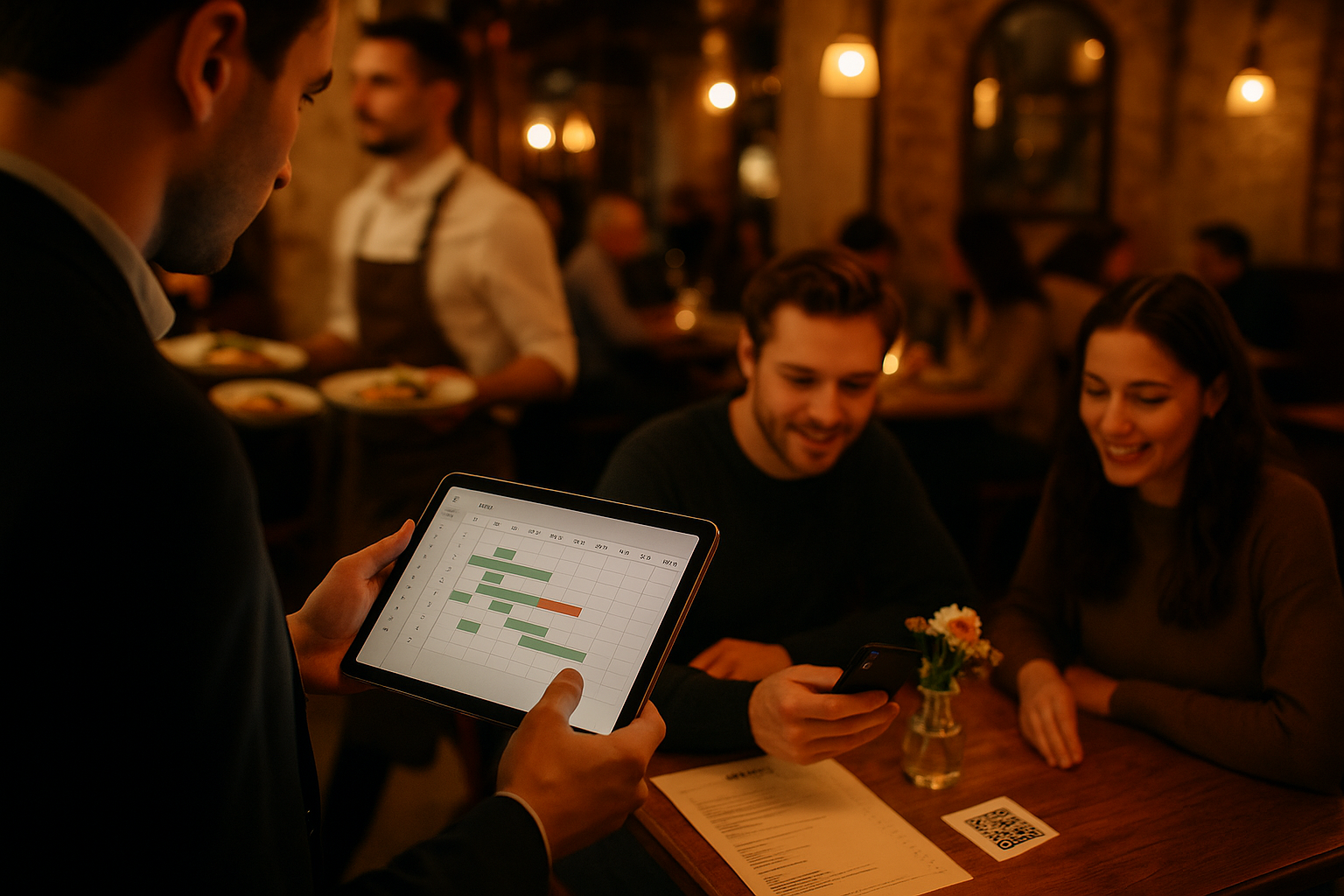
At Tabledoo we recommend using a minute‑precise timeline view to run scenarios: map your tables on the Y axis and time on the X axis, then simulate slightly longer covers for evenings where new items will be in demand. That small change in the booking grid often proves more effective than last‑minute staff juggling: it protects kitchen pacing and keeps guest expectations realistic.
Control arrivals: adjustable booking durations and realistic slotting
When a menu increases average service time, the simplest lever is the booking duration. Short‑term fixes—reducing available covers per slot or increasing booking durations by 10–20 minutes—create breathing room on the floor and in the kitchen. Use longer durations for prime dinner slots during the first two weeks of a rollout, then tighten them as prep times stabilise.
Also consider staggered arrival messaging. Update confirmation and reminder messages to tell guests what to expect—e.g., “New seasonal dishes launching this week; please allow extra time for plated dishes.” Clear communication reduces surprises and fewer guests will complain if the expectation is set before they arrive.
Speed ordering and reduce table touch with QR menus and table ordering
QR digital menus are now a familiar part of many European dining experiences and are especially helpful during a menu change. They let you publish up‑to‑date descriptions and allergen information instantly and can reduce the time a server spends delivering paper menus or explaining new dishes.
Where appropriate, enable table ordering via the QR menu so guests can browse and pre‑order drinks or starters while the kitchen ramps up. Table ordering and live menu updates reduce ordering friction and can shave minutes from the service cycle—particularly useful on launch nights when guests want to explore the new options.
Manage flow in real time: timeline grid, waitlist and live table status
A FOH timeline grid with minute precision becomes your operating map on launch nights. Seeing reserved, occupied and delayed states live lets hosts and managers make fast decisions: hold a table for a delayed party, move late arrivals, or open a quick‑turn outside table for walk‑ins.
Complement the timeline with a waitlist workflow: capture guest phone numbers, estimated wait time and party size, then push automated SMS updates as their table approaches. Automated updates reduce pressure at the host desk and keep guest experience calm when service is slower than usual.
Keep guests known and cared for: guest CRM and notes
During a menu change you’ll get questions: “Which dishes are quick?” or “Which ones are popular?” Record those interactions in your guest CRM. Tag guests who tried a new dish, note preferences and log any VIP responses. Front‑of‑house staff with access to those profiles can personalise suggestions, manage expectations and turn an early hiccup into a loyalty moment.
Post‑launch: learn, iterate and tighten slots
Use analytics after the first week to measure real impact: average cover duration, table turnover and peak bottlenecks. Did starters take longer than expected? Was one station overloaded? Adjust booking durations, reassign sections, or temporarily remove a complex dish from active promotion until staffing and prep are stabilised.
Small changes—shortening or lengthening booking slots by ten minutes, adding a server to bottlenecked sections for a weekend, or enabling table ordering on busy nights—compound quickly into smoother service.
Conclusion
Menu change management is operational work, not just creative work. By aligning reservations, realistic booking durations, timeline planning, QR menus with table ordering, waitlist workflows and a living guest CRM, independent restaurants can roll out new dishes without sacrificing speed or guest experience. Use your FOH tools to forecast, communicate and act in real time—protecting your kitchen rhythm and keeping guests delighted.
If you’re planning a menu rollout, try mapping the first two weeks in a timeline grid, adjust booking durations for prime slots, and enable your QR menu for table ordering. To see how these FOH workflows come together in one platform, explore Tabledoo and start a free trial at https://tabledoo.com