Most restaurateurs can point to the busy nights on the calendar — a local event, a weekend surge, the seasonal lift — and predict when covers will climb. The harder question is: who will be there to serve them? Forecasting demand without reliable insight into staff availability turns accurate booking data into a missed opportunity, producing understaffed services, stressed teams and uneven guest experiences. In markets still feeling the effects of persistent hospitality labour shortages, converting reservation patterns into smarter rostering is now a basic operational necessity, not a nice-to-have.
Why bookings alone aren’t enough
Knowing you’ll get 40 covers at 19:30 is useful, but it doesn’t tell you if your evening shift will have two experienced servers, one new hire and a bartender who finishes early. Across Europe, labour shortages and recruitment friction mean managers frequently react to staffing problems rather than plan for them. Industry surveys report a sizable share of weekly shifts are either understaffed or overstaffed, and many operators admit staffing gaps directly harm guest experience and force last-minute menu or service changes.
The gap between demand forecasts and staff availability comes from three predictable realities:
- Rotas are typically built from habit and rules of thumb rather than guest-flow data.
- Staff availability is fluid: sick calls, second jobs, and shift swaps are common.
- Managers lack a real-time, minute-level view that connects bookings to actual floor capacity.
Bridging that gap requires two things: better inputs (granular reservation and utilisation data) and better tools (real-time operational views and simple staff workflows that allow rapid decisions).
Turning reservation data into rosters that work
Reservation analytics are one of the most underused inputs for rostering. When analytics are surfaceable and practical, they change rostering from an art into a repeatable process:
- Use past booking patterns to identify true demand curves — not just the peak hour but the slope before and after it. This reveals when service pressure accumulates and when it dissipates.
- Translate covers into staff minutes. A utilisation report that shows table occupancy, average dwell time and peak cover density lets you estimate how many server-hours are actually required across the night.
- Factor party composition and guest profiles. Groups, multi-course menus and VIPs drive different staffing needs; guest CRM data can flag nights that need more experienced covers.
With those inputs you can build rosters that match the flow of guests rather than fixed shifts that assume constant load. Practical steps for immediate gains:
- Replace blunt per-slot rules with dynamic staffing targets derived from reservation analytics and utilisation reports. Shift start and end times become aligned with guest arrival and clearing rates.
- Use rolling forecasts for the next 7–14 days to shape hiring, overtime needs and cross-shift cover plans.
- Publish tentative rosters with clear, short windows for swaps and replacements — backed by a simple audit trail — so you keep visibility of who’s committed to each peak.
Tabledoo’s reservation analytics and utilisation reporting make the translation from covers to staff-hours straightforward: see where the covers concentrate, how long tables turn, and which sections drive pressure so you can distribute roles and hires accordingly.
On-the-night staffing: the Timeline and quick decisions
Even the best roster can be disrupted. That’s where a real-time operational layer matters. Minute-level visibility of who is on the floor, which tables are delayed, and which bookings are unassigned turns reactive firefighting into fast, informed decisions.
Key capabilities for on-the-night resilience:
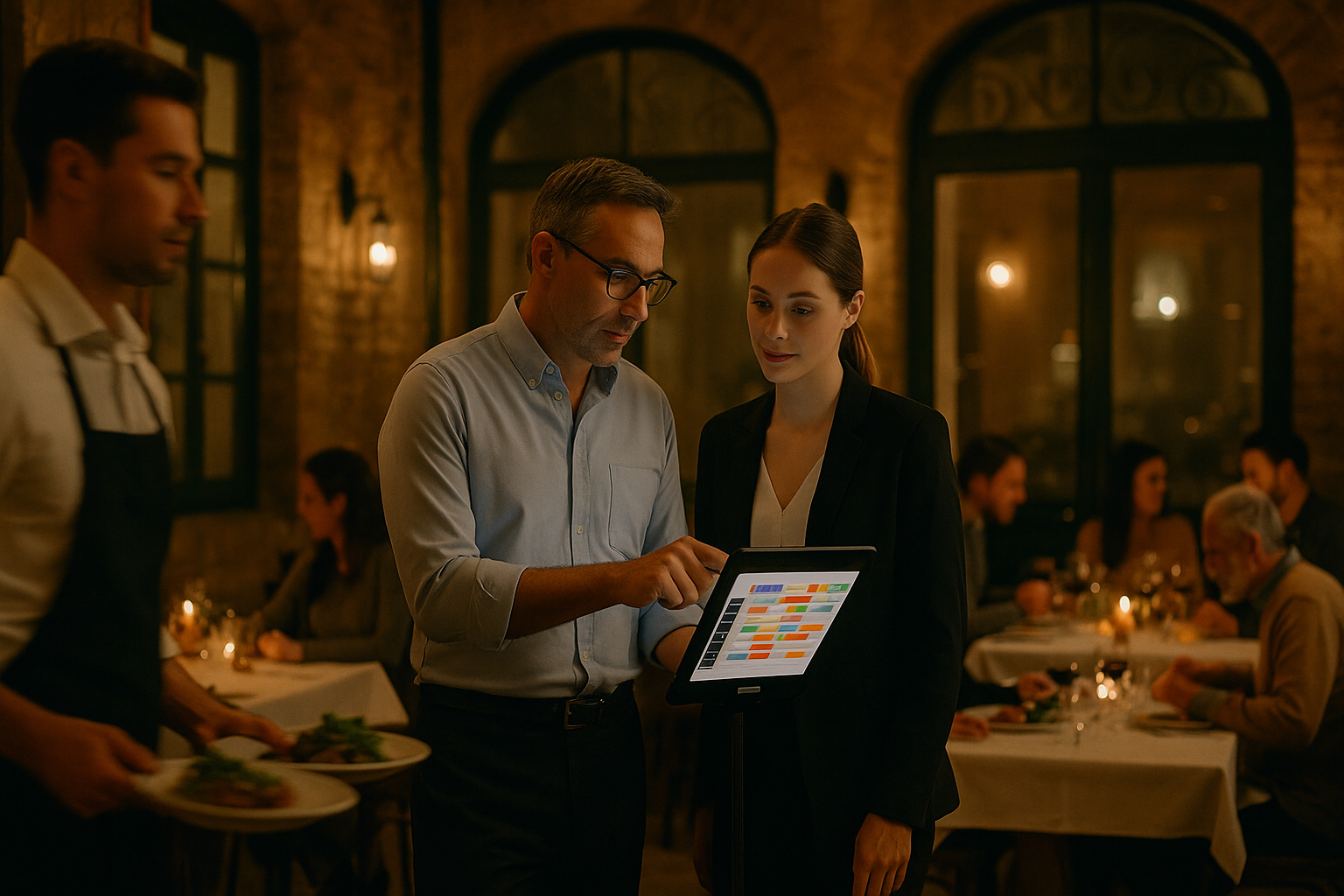
- Real-time Timeline: a minute-accurate, visual timeline of bookings and table states so hosts and managers can see emerging pressure points at a glance.
- Live table status and waitlist integration: know which covers are running long, where turnover is slipping, and which incoming walk-ins can be seated without harming service.
- Rapid re-assignment and quick-seat workflows: move a table, merge a party or reallocate a section with a few taps — and keep the front-of-house aligned.
When managers can compare the live Timeline to the utilisation baseline from analytics, they can make three small but powerful choices: move extra staff to a single section, convert a host to floor support for an hour, or throttle walk-ins until service normalises. Those decisions prevent service failures and reduce the need for emergency overtime or comped items.
Next steps
If understaffed nights have become a regular cost of doing business, start by using what you already own: your bookings. Pull reservation analytics to identify demand curves, run utilisation reports to convert covers into staff‑hours, and use a minute-level Timeline during service to make short-term staff reassignments easy. These steps reduce stress on your team, improve service consistency and protect revenue.
Learn how Tabledoo brings reservation analytics, utilisation reporting and a live Timeline into a single, front-of-house workflow — so you can predict the people, not just the peak. Visit https://tabledoo.com to start a free trial and see how smarter rostering reduces service failures and steadies your nights.