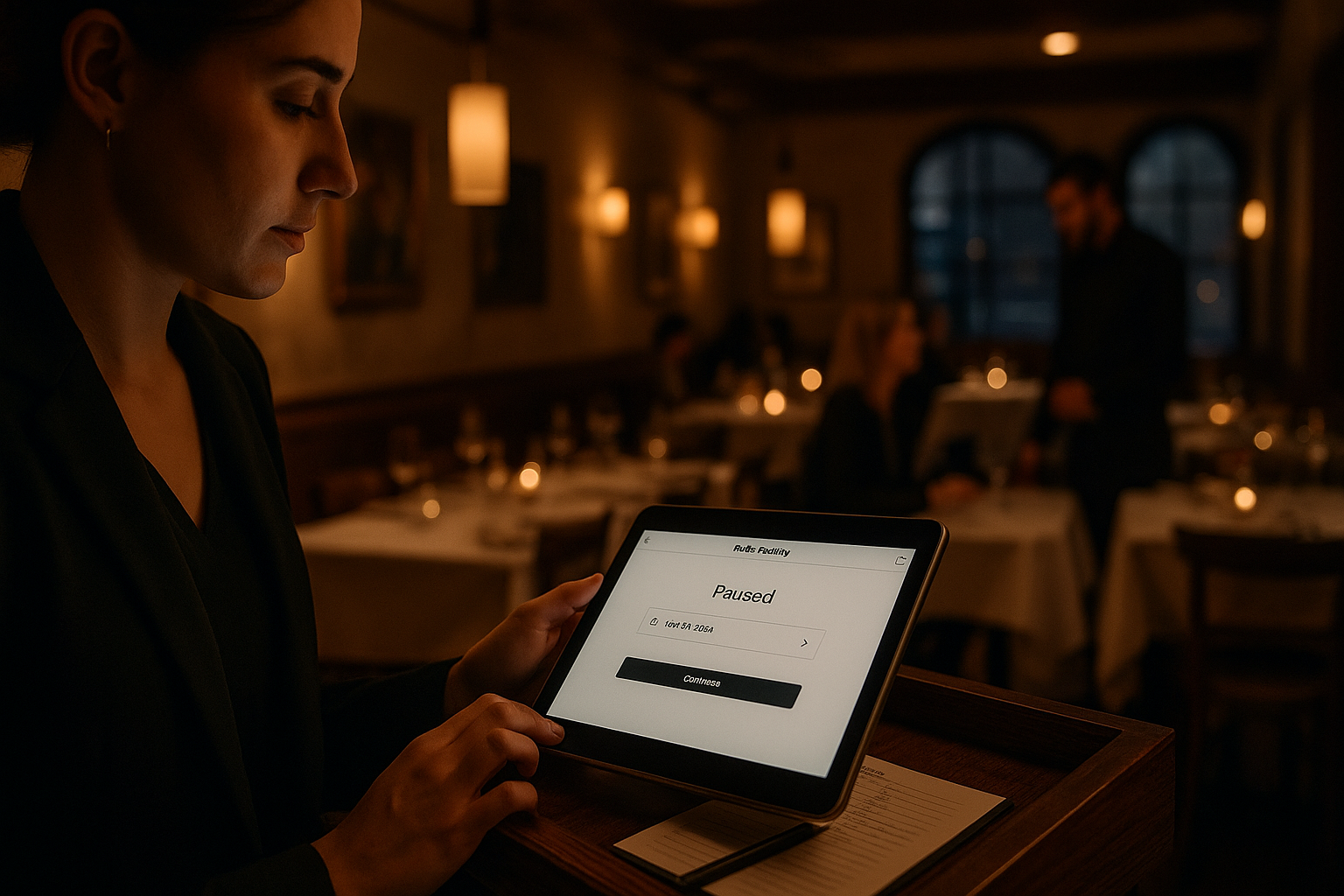
A food‑safety incident is as much an operational problem as it is a communications one. Independent operators need clear, repeatable actions that protect guests, limit revenue loss, and preserve trust — and your reservations system should be the hub for those actions. Below are pragmatic steps you can run from your booking platform to coordinate public updates, targeted outreach, and on‑the‑ground floor management while an investigation or recall is ongoing.
Rapid public updates: control the message before rumours do
First priority: a single, up‑to‑date public statement. Use your public booking page as the immediate, authoritative source for guests looking for information. Practical actions:
- Update the public booking page headline and top banner to show a brief status (e.g., “Temporary service change — investigating a food‑safety issue”) and a one‑line next step for guests.
- Pin a short FAQ on the page (hours, whether the kitchen is closed for investigation, how refunds/cancellations are handled).
- Use the booking page chatbot to answer common questions 24/7 (hours, contact phone, how to report symptoms) so front‑of‑house staff aren’t flooded by the same inquiries.
Why this matters: a single source of truth reduces inconsistent messaging and helps maintain trust with guests searching for answers.
Targeted outreach: segment, notify, and record responses
Not every guest needs the same message. Use your reservation system to create targeted lists and a clear outreach workflow:
- Identify affected bookings by date, time, and seating area. Export or filter reservations for the period under investigation.
- Send urgent SMS first, then follow up with email for full details. For urgent operational updates, SMS is highly effective for immediate reach and reads. Keep messages short and action‑oriented.
- Use your guest CRM to tag every contact as part of the incident (e.g., “Incident‑June2026‑Notified”) and add a short note for each outreach, who contacted them, and the message sent.
Suggested message template (SMS):
- “[Restaurant name]: We are contacting guests who dined with us on [date]. We are investigating a possible food‑safety issue. If you experienced symptoms, please call [phone]. For updates and refunds visit [booking page].”
Suggested email follow‑up:
- Brief timeline of the incident, steps taken, refund/cancellation policy, public health guidance, and a named contact for questions. Keep the tone factual, empathetic, and actionable.
Recording outreach in the CRM is essential: it shows regulators and guests you acted proactively, and it makes post‑incident recovery and analysis far easier.
Operational controls: pause, protect, and prioritise safety
While you communicate, change how you sell and seat covers to reduce risk.
- Pause online availability for affected dates/areas to prevent new bookings while you assess. This prevents additional guest exposure and gives your team breathing room.
- Open a manual waitlist for walk‑ins only if safe, and use the waitlist workflow to screen and log every walk‑in clearly.
- Use your floorplan and timeline grid to mark sections as closed, and shift staff assignments accordingly so service gaps are covered without overextending teams.
- If you must close temporarily, set the public booking page to show closed dates and enable a contact form so guests can request refunds or information without calling.
These controls keep new traffic away from at‑risk service flows and let you focus on containment and communication.
Post‑incident follow up and learning
After the immediate danger has passed, the work turns to recovery and rebuilding trust.
- Use guest tags created during outreach to run a follow‑up campaign: thank‑you notes, transparent incident summary, and any policy or training changes you made.
- Pull analytics from your reservation system to quantify cancellations, refunds issued, and revenue impact — these figures help with insurance claims and internal debriefs.
- Add a permanent CRM field or tag for staff training notes, supplier changes, and corrective actions so future audits show continuous improvement.
- Keep copies of outbound messages and timestamps in guest profiles; this audit trail is invaluable if regulators or legal processes require evidence of your communications.
Next steps
Crisis communication is an operational discipline. By treating your reservation system as the command centre — updating the public booking page, using the chatbot, sending prioritized SMS and email, pausing online availability, and tagging guest profiles to track outreach — you move from reactive to controlled response. Tabledoo’s public booking page, SMS/email notifications, AI chatbot and guest CRM are designed to make those exact steps executable from one place; use them to protect guests and preserve trust while you resolve the incident.
If you want a checklist or a short template bundle to apply these steps in your venue, visit https://tabledoo.com and start a free trial or book a demo with our team.