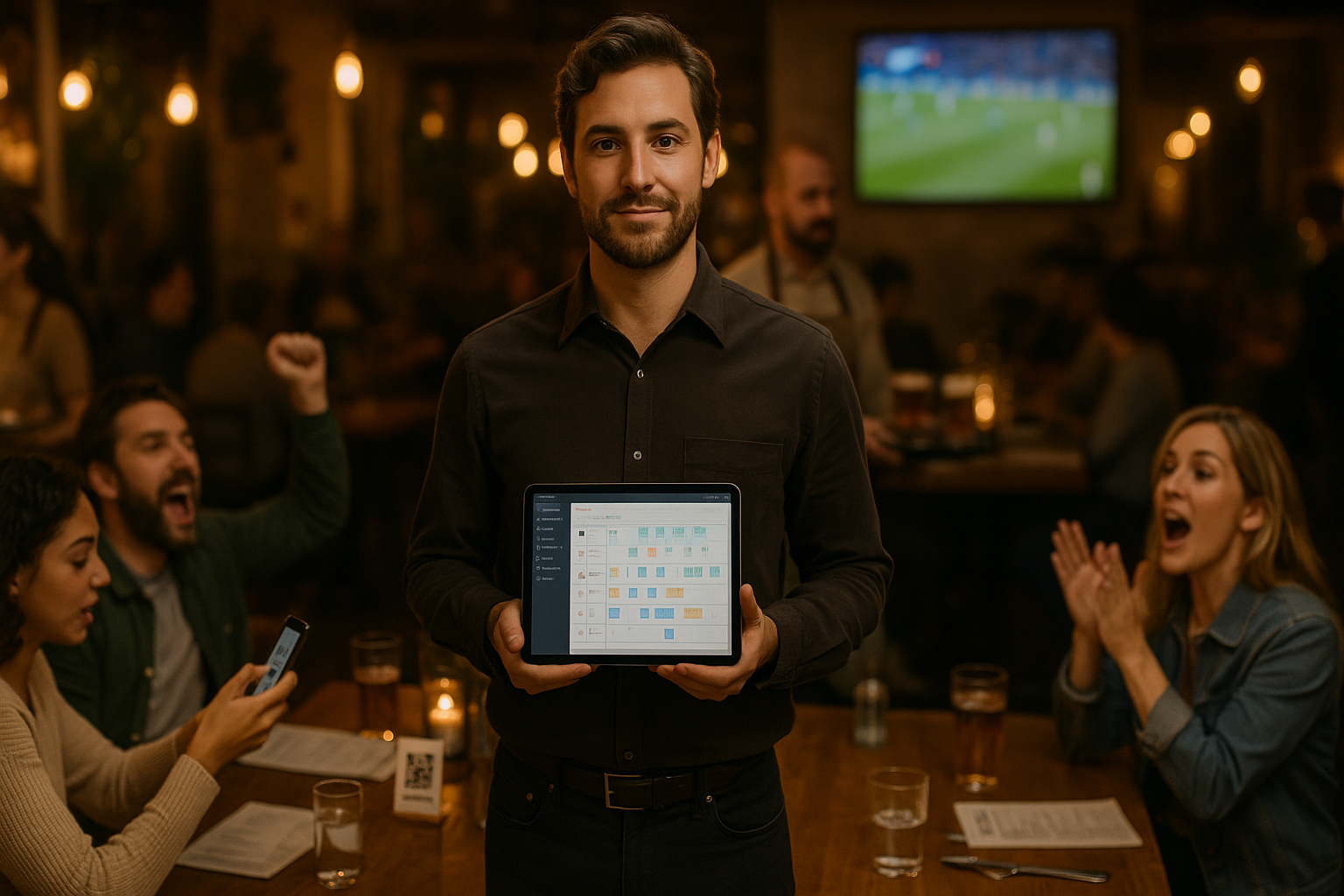
Major sporting events like the FIFA World Cup create short windows of intense demand: unpredictable walk-ins, late kick-offs, and groups who prioritise atmosphere over reservations. For independent restaurants that rely on margins and guest experience rather than scale, the opportunity is clear — and so is the risk. To convert event-driven footfall into sustainable covers without sacrificing service quality, operators need systems that lock in bookings, reduce no-shows, speed service and keep the floor moving. Here’s a practical playbook for how to manage reservations during events using a simple, integrated toolkit.
Convert spontaneous footfall into committed covers
Event nights flip customer behaviour. Many guests decide on the spur of the moment, but a significant share will book if the process is instant and visible. A commission-free public booking page removes the friction that kills last-minute reservations: guests can claim a table directly on your branded page without third-party fees, and you keep every cover.
Pair that page with clear availability shown on an interactive timeline or floorplan so guests see realistic wait times and options (bar seating, sofas, two-top near the screen). When people can reserve in seconds and receive immediate confirmation, they’re more likely to commit — freeing you to plan staff and kitchen capacity rather than scramble for seats.
Use timeline floor management and waitlists to control flow
A minute-level timeline grid (tables on the vertical axis, time across the horizontal) is the single most effective tool for managing peak demand. It makes duration visible: when a table is due to turn, where there’s a delay, and which sections can absorb incoming walk-ins.
During matches:
- Block short, flexible bookings earlier in the evening for casual viewers, then open longer service slots for late kick-offs.
- Use a digital waitlist with quick-seat workflows to keep the door moving — guests receive an SMS when their table is ready and can confirm one-tap.
This approach reduces the need for paper lists, avoids double-booking, and keeps the guest experience consistent even when the crowd arrives in one wave.
Cut no-shows and speed service with SMS and QR ordering
Reminders matter. Automated SMS confirmations and reminders (24–48 hours and again on the day) reduce no-shows dramatically because they give guests a simple path to confirm, cancel or adjust party size. One-tap links in SMS messages let you reclaim seats in minutes instead of hours — essential when a stadium crowd floods the neighbourhood.
QR table ordering transforms match nights from a service bottleneck into incremental revenue. Guests scan, order and pay from their phones; orders flow straight to the kitchen while servers focus on delivery and hospitality. That reduces average order-to-serve times, increases table turns, and raises per-cover spend because guests order more quickly and more frequently between halves.
Combine QR ordering with live table status and guest notes so staff know which tables need top-ups, which guests are celebrating, and which are VIPs — small details that preserve service quality during the busiest shifts.
A short operational playbook for match nights
- Pre-match: publish limited-time slots on your public booking page and promote them on socials and on-screen in the venue.
- Staffing: schedule an extra host and a floater waiter an hour before kick-off; use timeline view to assign sections dynamically.
- Messaging: send automated SMS confirmations at booking, a 48-hour reminder with one-tap confirm/cancel, and a 60–90 minute pre-arrival SMS for walk-ins and table-ready alerts.
- Overbooking smartly: accept a small, data-driven overbook in minutes-prior blocks if your historical occupancy and no-show patterns support it — but only when you have a timeline grid and waitlist to absorb spillover.
- Monetise screens: display QR codes linking to your public booking page and the digital menu. Turn casual viewers into repeat customers by adding a loyalty call-to-action on the post-meal confirmation screen.
After the event, use basic analytics to measure which slots converted best, which SMS messages reclaimed the most seats, and which menu items sold fastest during match breaks. Those insights let you refine pricing, staffing and marketing for the next big fixture.
Next steps
Big events will keep coming; the independents that use them to build patterns of repeat business will be the ones who thrive. If you want an integrated setup that combines a commission-free public booking page, minute-level timeline floor management, waitlist workflows, automated SMS reminders and QR table ordering in one subscription, explore how Tabledoo brings those tools together for independent operators.
Book a demo or start a free trial at https://tabledoo.com — and turn your next event night into a repeatable success.